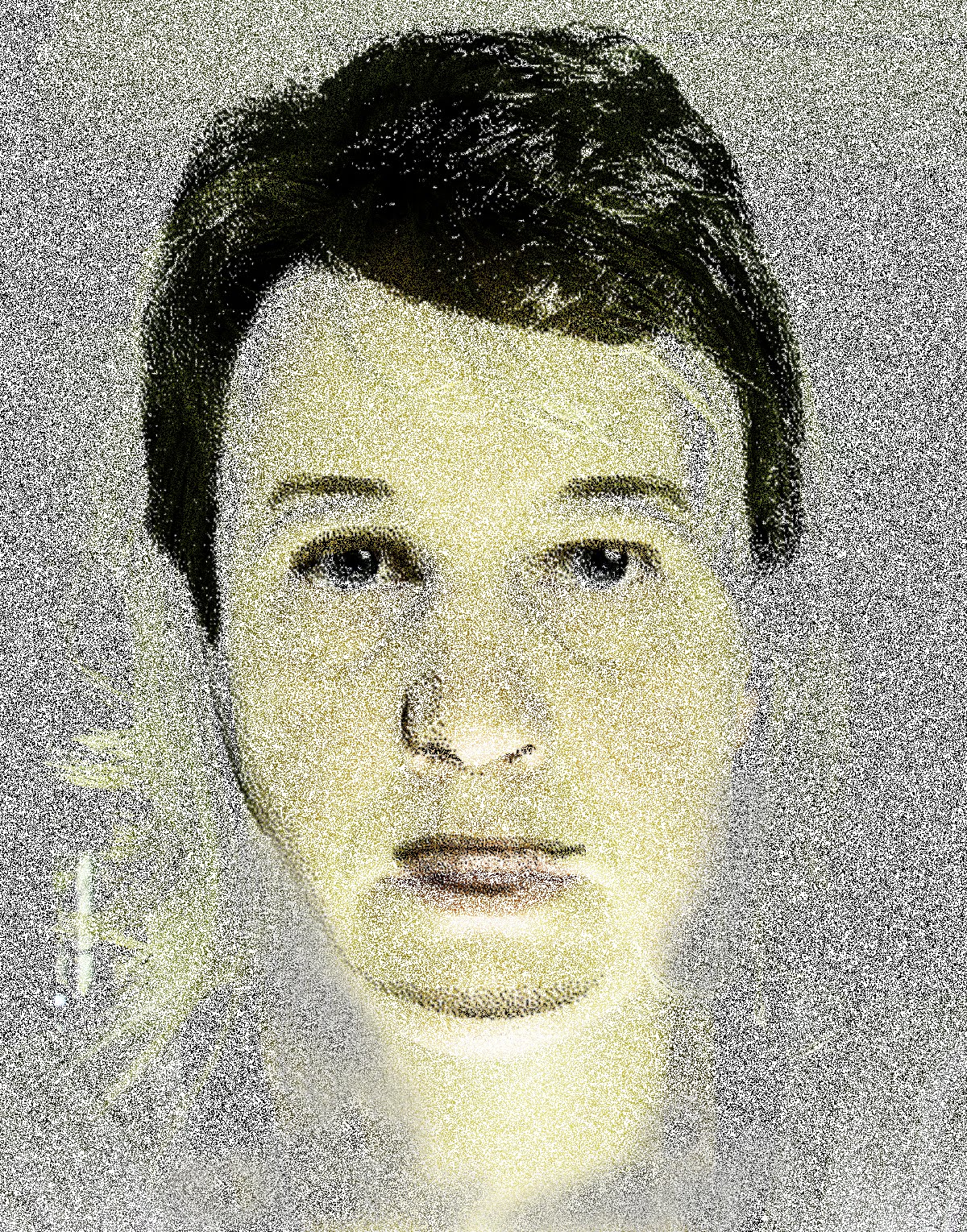
I'm dreaming of a french meadow


Inhabit : I’m Dreaming of a French Meadow.
Jude Anderson

Installation: Thur 25th – Sun 28th Feb, 12pm – 5pm
Live performance: Fri 26th Feb 8.30pm Cedric Peyronnet & Jacques Soddell
Venue: Dormitory Two, Rosina Building, Abbotsford Convent, 1 St Heliers St, Abbotsford

At the Abbotsford Convent there’s a place called the French Meadow where plants run free. From the Convent dormitories where girls once slept in disciplined rows between the strict folds of white cotton sheets, you catch glimpses of the French Meadow. It’s a tempting, gay abandon in this place of precise sleep patterns. In I’m Dreaming of a French Meadow, Jude Anderson in collaboration with photomedia artist Tara Gilbee invites you to a field of reverie; a dormitory now filled with secret gardens where the field recordings of sound artist Jacques Soddell and those of French sound artist Cedric Peyronnet float from each bed and weave through the shifting sleep patterns of an imagined cosmos. A waft of the wild in the girls’ dorm.


VIMEO OF LIVE PERFORMANCE:
http://vimeo.com/23894117


I’m Dreaming of a French Meadow combines an installation with a live performance that brings Peyronnet and Soddell together for a combined field recordings concert.

The installation draws inspiration from the French notion of ‘le jardin secret’ - an undisclosed place of desire or escape, along with the garden beds and secrets of the Abbotsford Convent, and the garden beds tended by the immigrant and refugee gardeners of the Atherton Community Gardens.

Associated artists: Tara Gilbee, Cedric Peyronnet, Katie Sfetkidis, Jacques Soddell.


Digital still: Tara Gilbee 2009

In Situ
Jude Anderson & Emilie Collyer
Dates and times: 3rd February – 21st Feb
Launch Wed 3rd Feb 6-8pm
Then Wed – Sun 10am – 5pm
Venue: c3 Gallery, Abbotsford Convent, 1 St Heliers St, Abbotsford

In-Habit In Situ: Instant Actions
In October 2008 an open invitation went out to over 3,000 artists (via the Melbourne International Arts Festival Card Holder scheme, Regional Arts Victoria and the City of Yarra). The invitation was to attend a tour of the Abbotsford Convent, particularly to buildings that, at the time, were in a state of ‘pre-renovation’ and/or not open to the general public.

After the tours, each artist was invited to return to the Convent during 2009 and undertake an ‘Instant Action’. This could take whatever form the artist chose and would extend for approximately 15 minutes. We asked each artist to document their Instant Action. The documentation is being presented as part of the In-Habit In Situ exhibition at c3 Gallery from 3rd – 21st February 2010.

28 artists elected to perform Instant Actions. Of these, 10 artists carried out their Instant Actions and 8 provided documentation.

Punctum associated artists have also contributed to the Instant Action documentation and exhibition.

In Situ Instant Actions: Artworks and Artists
The laundry - berni m janssen (DVD)
The material and the liminal - Kate Hunter (DVD)
Song cycle for a shadow - Rachael Guy, David Churchill, Andy Jackson (Video & audio recording)
Signs of life/Wish you were here - Amy Tsilemanis (Photographs and Audio recording)
Laundry - Smiljana Glisovic (DVD)
Sacred Heart - Daniel Armstrong (DVD)
koorie~konduit~2010 - Scott Lyon (Print – typography and illustration)
In-Habit: vestiges of research - Artwork by: Jason Maling, Tara Gilbee and
William Head


Digital still: Tara Gilbee 2009

For more in depth information on this extensive research residency into cultural exchange please visit:

http://www.punctum.com.au/inhabit.html

New Works


This is a preview of works currently being undertaken in the studio and on travels. This folio of work is a continuation of my exploration of photographic means of transforming objects, utilising the mechanical modes of lens refraction and projection, i manipulate images in camera via a number of distortions.


The space in between: book project

Main Gallery: 2 October - 29 November 2009


The space in between book project on display in the Main Gallery, 2009


The space in between book project is an intriguing and thought-provoking exhibition that investigates the nature of books and their place within our ordinary lives. It features work by thirty-two artists from across Australia, who have each responded to the internal space of a book carved and presented to them for their artistic intervention.


Wendy Kelly, Threads of Jason's Journey, 2007, mixed media


Curator and collaborator Tara Gilbee has spent many months collecting dozens of books, in English and foreign languages, with colourful and often decorative hard covers and infinite variations of ivory toned pages. With a scalpel and considerable care, she has carved out a section from each book: sometimes guided by the formal structure of an embossed surface, at other times led by the layout of title and text on each cover. The participating artists were presented two objects - the remnants of the book with its empty cavity, and the detachable core - with which to create a work for book project. The end results on exhibition represent a vast array of responses, including sculptural work, installations, and even drawn and photographic reworkings of the original volumes.

http://www.wagga.nsw.gov.au/art-gallery/exhibitions/exhibitions-2009/the-space-in-between-book-project

Deluge


Deluge: Tara Gilbee and Andrew Goodman

Installation with sound track, video, light projections and sculpture.


Deluge was an immersive sound and video project that refered to the anticipation of water and its effect of taking over, temporarily transforming and overwhelming the space or body. It implied a threshold, a transitional state, or a border that can be crossed to another space, place, time or state of being.

The installation drew on a sense of wonder and awe to create elevated feelings of a ephemeral dreamlike state. The work transformed the site ( ICU Castlemaine) into a space that seemed otherworldly – into an hallucinatory portal or threshold, a ‘magical’ secret space. Engaging a dynamic interplay between the underbelly of the building and an imaginary spirit world.
The video work installation revolved around the psychological qualities of eerie but intriguing spaces often utilised in animation and films.


The installation referenced science fiction, anime and Japanese horror films in which the underworld and lurking forces within dark spaces act as an embodiment of the subconscious. These films often exploit an Animist view of the world – where inanimate objects have spirits or a life force within. The building begins to come to life as it oozes water, suggesting a presence in the space.

For a number of years I have worked with Andrew Goodman on a number of proposals and projects.This project Deluge concludes that collaborative work and relationship.

GUISE

Overview: Who Just Happened
The real skill of the practitioner lies not in skilled concealment but in the skilled revelation of skilled concealment... Hence power flows not from masking, but from an un-masking which masks more than masking does.
~Michael Taussing, from Viscerality, Faith and Skepticism

We shall not cease from exploration, and the end of all our exploring,
will be to arrive where we started and know the place for the first time.
~TS Elliot

Two artists from opposite sides of the world, having never met, work with issues of how the self perceives the unknown other in physical and virtual space. Exploring myriad methods of projecting and receiving identity including portraiture, identity theft, performance, and installation, the collaboration will mark their progression toward knowing their fellow collaborator and the nature of the project itself.

Collaboration involves both conscious intentions and unforeseen outcomes of working with someone else. There is a loose promise made, a choice to work with someone with whom one hopes to be artistically compatible. Collaboration depends on a certain assumption of known quantities, ie. self and other. Here however, two strangers are combining into one unknown individual, short-circuiting any sense of control.

Tara Gilbee of Melbourne, Australia, and Robert de Saint Phalle of New York City, United States, met via email and quickly realized the possibility of working together from half a world away. The resulting project spans three phases of proximity and embodiment.


Act 1: Facebook Swap
Gilbee/de Saint Phalle's first exchange will be a set of portraits done using the social utility Facebook. After trading accounts, they will create the other's profile using their research and expectations. For several weeks they will operate under their collaborator's avatar, collecting and interacting with the other's social network. Their portraits will shift over time with feedback from the other's friends and colleagues. In this phase, their close virtual proximity belies their actual physical distance on opposite sides of the earth. De Saint Phalle wonders if there is feminism without a body; Gilbee assumes Facebook is the equivalent of nightclub surveillance (or is it the other way around?).


Act 2: Live-Work Share
De Saint Phalle/Gilbee's second exchange was an installation of a shared studio space in Tara's hometown of Castlemaine, Australia. They were in the same space during different times, taking shifts in the studio. Their efforts focussing on the portrayl of their unknown collaborator and consequently leaving evidence of their own body's activity in space. As the self is in the body, they will saught their collaborator's residual presence to inform their portraits. Is this actually a collaboration or just forensic narcissism?


Act 3: Unmasking? : The Performance

The Housemates' “Ignore The Obvious Task” came to a staggering end with tragic results. ~Big Brother, Australia

The studio a central and small brick space, was actually previously used as a toilet block for the school next door, it had then add feeling of the secretive and furtive meeting of strangers in public places.

A invite was sent and a crowd gathered, through a port hole the un masking could be viewed, on the other side of the space a room was set up as an anti chamer and the audience could wait in this space and over the wall hear the conversations and unveiling take place.

Prior to the Unveiling, both Tara and Robert had on balaclava's, Tara asked Robert to look at a mug sheet and pick which one he thought she was. He picked the wrong one!

Sound Atlas Series: Central Victoria, Robert Curgenven with Tara Gilbee


RF003
RF003
Sound Atlas Series:
Central Victoria
Robert Curgenven with Tara Gilbee

Detailed, dream-like photographs and field recordings realised in conjunction with the Test Match project at Allans Walk Artist Run Initiative in Bendigo (Central Victoria), 14-20 November 2007. A beautifully produced collection of photographs and field recording compositions presenting an audiovisual survey of the area in and surround Castlemaine to the growing regional centre of Bendigo, combining an intimate local knowledge with an extensive understanding of the Australian landscape. Re-approaching the concept of the Sound Atlas developed in RF001, Gilbee and Curgenven uncover the regions’ socioeconomic and geo-historical dimensions – from the site of the world biggest alluvial goldrush in the 1850s to a landscape radically transformed: to ghost towns; by the ravages of prospecting, industrial developments; and the new tide of “settlers” fleeing the big cities.

http://www.recordedfields.net/label/releases_rf003.asp

Blindside Exhibition 2007


Video work exhibited by Tara Gilbee and Andrew Goodman related to the collaborative project, Deluge. The small video and sound pieces were part of a series of works which explored concepts about the transformative nature of and metaphors associated with water. In their recent work both artists have explored the experience of the human body.


Drawing upon the writings of Deleuze and Bataille that advocate the immersion of the body in physical sensation, these projects explored the concept of ‘affect’, the direct physical connection between the viewer’s body and the ‘event’ that works to blur boundaries between the two. The work references science fiction, anime and Japanese horror films which frequently exploit an Animist view of the world. In this small work the viewer’s engagement with the work was intimate and voyeuristic.

for further information
http://www.blindside.org.au/2008/the-big-smoke.shtml

mise en abyme 2007

TARA GILBEE
Mise en Abyme

Gilbee’s oeuvre entails a complex exploration of human existence that often borders on the ineffable.  The ethereal and somewhat ephemeral nature of her materials complements this sensibility while enhancing an intrinsic poeticism in her work.  While this exhibition continues her investigation of ‘interior’ worlds - on both physical and psychological levels – the work shifts towards an exploration of the relationship(s) that exist between consciousness and the creative impulse through emotions such as fear, anguish and desire.

Using photography (light) as her principal medium, Gilbee has constructed mysterious and elusive collages in both still and video formats.  Comprised of abstract and fragmented human (mostly male) forms - including eyes - Gilbee transforms popular imagery found in magazines into a preferred aesthetic derived from her unconscious and/or the shifting, shadowy forms of dreams and imagination.  Reminiscent of surrealist photography and cinema, these evocative forms also act as symbols of erotic desire which the surrealists saw as providing the stimulus for revelation and creativity.

What is interesting, however, is Gilbee’s further use of light to ‘ephemeralise’ the above formats and intensify the dreamlike quality of her chosen imagery.  For example, a light placed underneath the stills - mounted on semi-opaque Perspex - casts residual phantom-like forms onto the walls.  On the other hand, the video is projected into a three-dimensional, translucent black Perspex structure that reflects, diffracts and diffuses the imagery through layered, angular surfaces so it forms a continuously changing shape that mutates and transforms in a rhythmic pattern determined by a breathy, whispering voice that repeatedly utters the words, “his eyes, his eyes, his eyes…”

As the allegory of Plato’s cave would have us believe, these shadow- or dream-like forms demonstrate that the foundation of reality can never be reached and we can only ever observe and/or know things in their ideal forms.  Another protagonist of this idea was Lacan, who often stated that “the real is impossible”.  But for both, this is because we are caught up in a symbolic order of language ie. reality cannot be expressed in language because the very entrance into language marks our irrevocable separation from the real…

By asserting that the unconscious is also structured like a language[1], Lacan suggests that our lack of any relation to reality is what gives rise to our fantasies and leaves us in a constant state of desire.  If we return to Gilbee’s work and her exploration of consciousness, her use of the idealised man is as a symbol of fantasy and desire.  But in recognising this and completely transforming the ideal into an abstracted, dream-like form it also becomes a symbol of her own creativity.

As the title Mise en Abyme suggests, the imagery in the primary photographic and video formats represent an emblematic structure that belongs to a larger narrative, which is represented in the projections.  The ensuing phantom-like forms and infinitely transforming images within the black Perspex structure are like a dream-within-a-dream and symbolise our lack of reality through the intertextual nature of language.  But it also symbolises the artists’ studio - an unending journey into the unconscious, releasing fantasy, desire and creativity.

© Kirsten Rann, Melbourne July 2007


[1] Lacan, Jacques, The Four Fundamentals of Psychoanalysis (The Seminar of Jacques Lacan, Book 11), 1998, p. 203.

exhibition ' 3X3 = 6 degrees of separation' in Darwin @DVAA

Further images for this show will be posted in time, however I thought it would be good to add this link from a work that Jacques Soddell did for the show.

Titled 'Spaces' 2007 : Jacques derived sounds from the spaces betweens words in earlier interviews he had recorded for Punctum's production of 'Shed' in 2005.

http://vimeo.com/64701204


Chinese Whispers


Castlemaine State Festival : 2007

Installation in New China Restaurant,Castlmaine. Collaboration between Tara Gilbee and Andrew Goodman.

This art work was composed of digital stills on transperant film, light boxes, paper leaves and surround sound. The work emulated an asian pagoda and worked with the idea of rumour mills and secretative conversations, furtive sound bites in small towns.

Utilising inspiration from the decor and site the work created a small installation which was a new custom within the restaurant for two weeks. The audience to this work where a broad range of people, from the elderly who had a regular table at the front of the restaurant, to children who ran around the work exclaiming "its alive in there".